In this guide (20 sections)+
As parents grow older, many families face a difficult reality: they cannot always be there in person. You may live in another city, another state, or even another country. Your parents may still be independent and comfortable living in their own home, but a question can quietly follow you throughout the day: Are they okay today?
Calling every day sounds like the obvious solution. But work gets busy. Time zones do not always match. Parents may not want to feel that they are being constantly monitored. And sometimes, missing a phone call simply creates more worry. An elderly check-in service can help create a simple, consistent routine that gives older adults independence while helping their families stay informed.
What Is an Elderly Check-In Service?
An elderly check-in service is a system designed to regularly confirm that an older adult is safe and doing well.
- A phone call
- A mobile application
- A text message
- A wearable device
- An automated daily call
- A professional caregiver
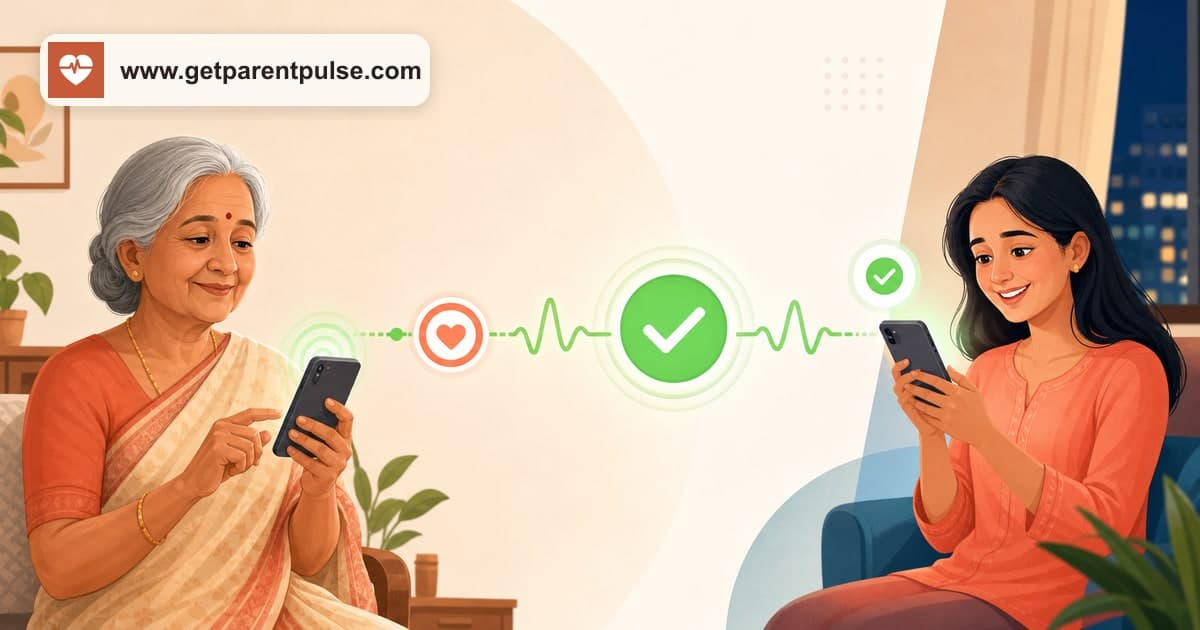
The basic idea is simple: instead of waiting until someone becomes worried, the family creates a regular check-in routine. For example, an elderly parent might receive a phone call every morning. They answer the call and confirm that they are okay. If they do not respond after the expected attempts, the system can alert family members or other trusted contacts.
This creates a small but meaningful connection between an older adult living independently and the people who care about them.
Why Daily Check-Ins Matter
Most days are completely normal. Your mother makes her morning tea. Your father reads the newspaper. They go for a walk, visit the market, talk to neighbours, and continue with their normal routines. The challenge is that families living far away cannot always know when something is different.
A parent may feel unwell. They may have fallen. They may need help but be unable to reach their phone. Or they may simply miss their usual routine.
A daily check-in does not prevent every emergency, and it should never replace emergency services or appropriate medical care. However, it can help families notice when an expected routine has been interrupted. Instead of wondering, “When did someone last speak to them?”, there is a regular system designed to check.
Who Can Benefit From an Elderly Check-In Service?
An elderly check-in service can be useful in many family situations.
Older Adults Living Alone
Many seniors want to continue living independently in their own homes for as long as possible. A daily check-in can provide an additional layer of reassurance without requiring someone to physically visit every day.
Families Living in Different Cities
Children often move away from their hometowns for work, education, or family responsibilities. You might live in Bengaluru while your parents live in Jaipur. You might work in Mumbai while they remain in Lucknow. Even a few hundred kilometres can make regular in-person visits difficult. A consistent check-in routine helps bridge some of that distance.
NRIs With Parents in India
For families living internationally, distance becomes even more challenging. Different time zones can make daily calls difficult to coordinate. A son or daughter in Canada, the United States, Australia, or the UK may be asleep when their parents begin their day in India. An automated elderly check-in service can provide a regular routine regardless of time-zone differences.
Seniors Who Do Not Use Smartphones
Many safety solutions assume that every person owns and comfortably uses a smartphone. That is not always true. Some older adults prefer ordinary phones. Others have smartphones but rarely use apps. Some may find complicated interfaces, passwords, notifications, and frequent updates frustrating. For these families, a phone-call-based check-in can be much easier.
The Problem With Relying Only on Family Calls
Calling your parents regularly is valuable and should not be replaced by technology. But family calls and safety check-ins serve different purposes. A family conversation is about connection. A daily check-in system is about consistency.
You may normally call your parents every evening, but then an important meeting runs late. The next day is busy. Your parents may also avoid calling because they do not want to disturb you. Suddenly, two days have passed. A structured check-in creates a routine that does not depend entirely on everyone’s schedule. It can work alongside normal family conversations rather than replacing them.
How an Automated Elderly Check-In Service Works
The exact process depends on the provider, but a simple phone-based system can work like this:
- A senior receives a scheduled call at approximately the same time each day, creating a familiar routine.
- They confirm that they are okay, often by simply answering and pressing a number on their phone.
- The family receives reassurance because the system records the successful check-in.
- A missed check-in triggers the next step, such as retrying the call before alerting designated family members or trusted contacts.
This approach can be particularly useful because it requires very little new technology for the older adult to learn.
What to Look for in an Elderly Check-In Service
Not every family needs the same type of service. Before choosing one, consider a few important questions.
Is It Easy for Your Parent?
The system should match your parent’s comfort with technology. If they do not regularly use apps, an app-only service may create more frustration than reassurance.
What Happens After a Missed Check-In?
This is one of the most important questions. Does the service try again? Who receives the alert? Can multiple family members or trusted contacts be notified? Understanding the escalation process is essential.
Does It Support Emergency Situations?
A daily check-in and an emergency alert are different features. Look carefully at what emergency or SOS functionality is available and understand exactly what happens when it is activated.
Can Family Members Stay Informed?
If siblings or multiple relatives share responsibility for an elderly parent, the service should make it easy for the right people to stay updated.
Does It Respect Independence?
Safety technology should help older adults feel supported rather than watched. For many families, the best system is the one that quietly fits into everyday life.
Daily Check-Ins Without Taking Away Independence
There can be a delicate balance between caring for aging parents and respecting their independence. Parents who have managed their own lives for decades may not want to feel monitored by their children. That is why a simple daily check-in can sometimes work better than more intrusive solutions.
The question is not: “What is Dad doing every minute?” It is simply: “Did Dad check in today?” That small distinction can make the experience feel less like surveillance and more like reassurance.
How ParentPulse Approaches Daily Check-Ins
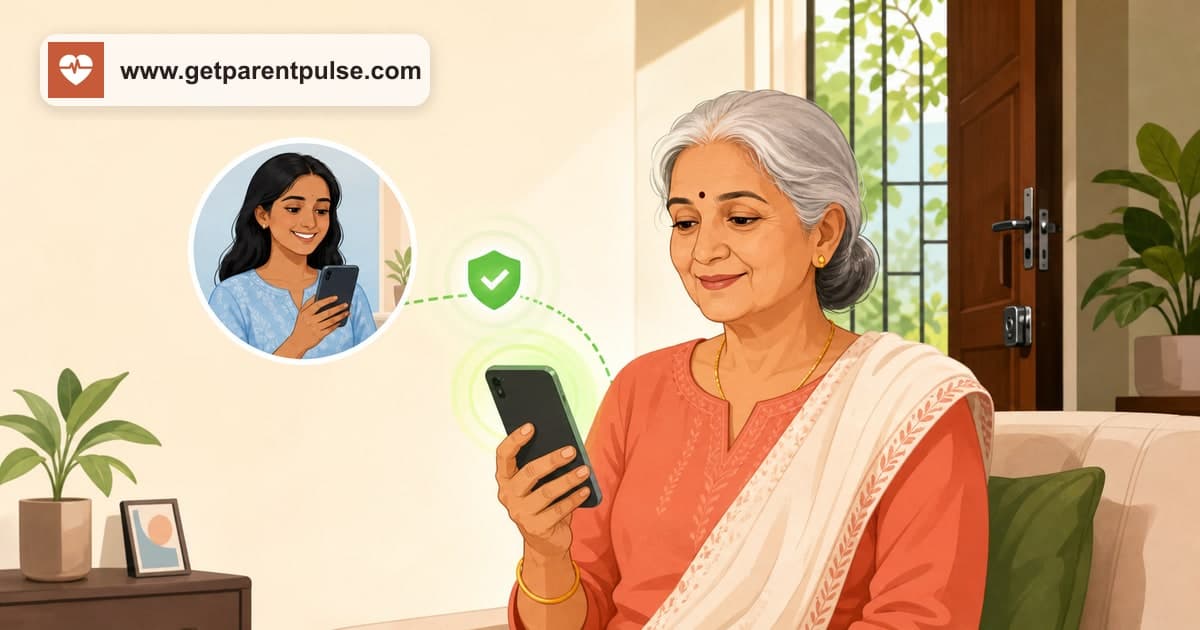
ParentPulse is designed around a simple idea: staying connected with aging parents should not require them to learn complicated technology. With ParentPulse, an elderly parent can receive a scheduled check-in call on their regular phone. They can confirm that they are okay using a simple phone response.
When everything is normal, the family gets reassurance. If a check-in is missed, the system can follow the configured alert process so the appropriate family members or trusted contacts can take action. The goal is not to replace conversations between parents and children. It is to provide a dependable safety routine between those conversations.
ParentPulse also focuses on making SOS support available as an important part of the safety experience, helping families create another way for their loved ones to signal when they may need assistance.
A Simple Example
Imagine that Priya lives in London while her parents live in Jaipur. She normally speaks with them several times a week, but the time difference and her work schedule make daily calls difficult. Every morning, her mother receives a ParentPulse check-in call. She answers. She confirms that she is okay.
Priya does not need to interrupt her workday to check whether everything is normal. Later that evening, she can call her mother simply to talk. The check-in is about reassurance. The personal call is about their relationship. Both can exist together.
Technology Should Make Caring From a Distance Simpler
Families today are more geographically separated than ever. Children move for careers and opportunities, while parents often prefer to remain in the homes and communities they know. Distance does not reduce how much families care. But it can make everyday reassurance more difficult.
An elderly check-in service cannot replace family, neighbours, caregivers, healthcare professionals, or emergency services. What it can do is create one small, dependable routine. One check-in. Every day. And sometimes, simply knowing that your parent has checked in can make living far away feel a little less distant.
Frequently Asked Questions
What is the best way to check on an elderly parent living alone?+
There is no single solution for every family. A combination of regular family communication, trusted nearby contacts, appropriate healthcare support, and a daily check-in system can create a stronger support network.
How often should you check on elderly parents?+
This depends on their health, independence, living situation, and personal preferences. For independent seniors, a simple daily check-in can provide regular reassurance while allowing them to maintain their normal routine.
Can an elderly check-in service work without a smartphone?+
Yes. Some services use ordinary phone calls rather than requiring the older adult to install or operate a smartphone application.
What happens if an elderly person misses their daily check-in?+
This depends on the service. A system may make additional call attempts and then alert designated family members or trusted contacts. Families should always understand the exact escalation process before relying on any service.
Does a check-in service replace emergency services?+
No. A check-in service should be considered an additional layer of support, not a replacement for emergency services, professional medical care, or appropriate supervision.
Stay Close, Even When You Live Far Away
Your parents may not need someone watching over them every minute. Sometimes, you simply want to know one thing: They’re okay today. ParentPulse helps families create a simple daily check-in routine for aging parents, without requiring complicated technology. Because caring from a distance should still feel connected.
Learn how ParentPulse daily check-ins work and choose a routine that fits your family.
A little reassurance, every day
Know they’re okay—without another reminder on your list.
ParentPulse makes a daily check-in as easy as answering a call, giving a missed call, or tapping one WhatsApp button.
Join the waitlist →