In this guide (7 sections)+
If your parents live alone in India and you don't, you know the quiet worry that sits in the back of your mind every morning: Did Papa take his BP tablet? Did Amma eat? Is she okay today? You can't be there, and calling every single day slowly turns from love into nagging — for both of you. Here are practical, respectful ways to know your parents are okay each day without hovering over them.
1. Agree on a simple daily signal
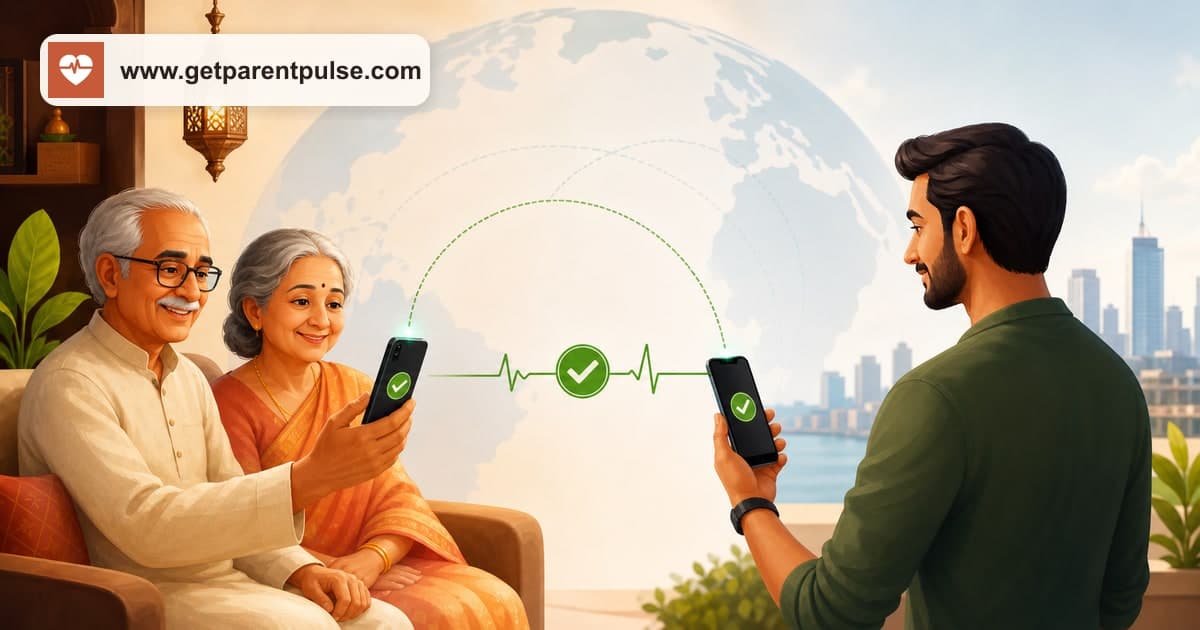
The most sustainable check-in is the smallest one. Instead of a full phone call, agree on a tiny daily signal that means 'I'm fine' — a one-line 'good morning' message, a missed call to your number, or a thumbs-up on WhatsApp. It takes your parent five seconds, carries no pressure to chat, and gives you the reassurance you actually need. The key is consistency: same signal, same time each day, so its absence is meaningful.
2. Fix a time — and respect it
Pick a time that fits their routine (right after morning tea is popular) and stick to it. A predictable rhythm means you're not anxiously watching your phone all day, and they're not caught off guard. It also makes a missed signal genuinely informative rather than just 'they're busy.'
3. Build in a grace window before you panic
A missed check-in is usually nothing — they were at the temple, the phone was on silent, they forgot. Don't let one missed signal trigger a panic call to a neighbour. Give it a buffer (an hour or two), try once more, and only then escalate. False alarms are exhausting and train everyone to ignore the system, which defeats the purpose.
4. Line up a local human, not just an app
- Save the number of a trusted neighbour, relative, or family friend who lives close by.
- Tell them, in advance, that they may occasionally get a call to physically check in — so it isn't a cold surprise.
- Keep a doctor's number and the local emergency number (112 in India) handy.
Technology tells you something is wrong; a person nearby is who actually helps. The strongest setup pairs a daily digital signal with one real human who can knock on the door.
5. Don't require a smartphone
Many elderly parents in India have a basic feature phone, or a smartphone they barely use. Any system that assumes they'll open an app reliably every day will fail. Missed-call check-ins and automated voice calls work on any phone and lean on habits people already have — which is exactly why they stick.
6. Frame it as care, not surveillance
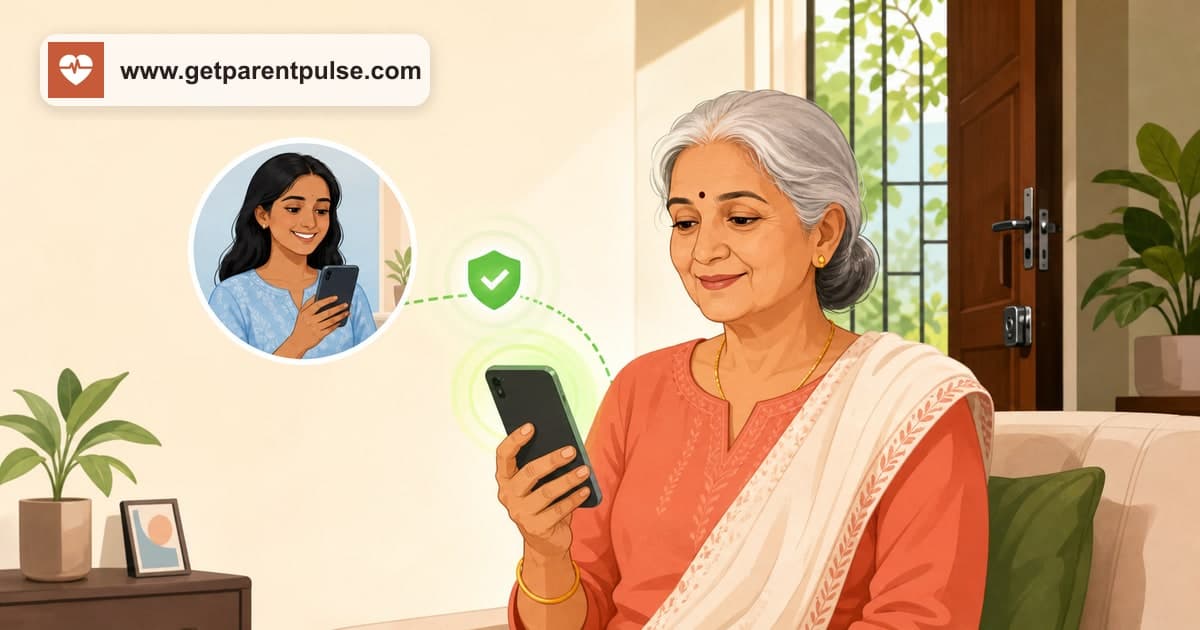
The single biggest reason these systems fail isn't technology — it's dignity. A parent who feels monitored will resist. Framed as 'one small signal so your children don't worry,' most parents happily do it, and many come to enjoy the daily ritual. Always ask for their agreement first; it should feel like a kindness they're doing for you, not a leash.
Where a service can help
Doing all of this manually — calling at the same time, tracking who checked in, remembering medicines, coordinating with siblings — gets heavy fast. This is exactly the gap ParentPulse fills: a daily automated check-in for your parents in India by voice call, missed call, or WhatsApp (no smartphone needed on their side), with instant alerts to you only if something's off. It's the structure above, without the daily effort. However you do it, the goal is the same — quiet, daily peace of mind, for you and for them.
A little reassurance, every day
Know they’re okay—without another reminder on your list.
ParentPulse makes a daily check-in as easy as answering a call, giving a missed call, or tapping one WhatsApp button.
Join the waitlist →